
Stable Gold Collateral Bonds for Pension Funds and Credit Union
Advantages of Stable Gold Collateral Bonds (SGC™) Vs. Other Fixed Income Choices
George W Beard and Howard J Gunn
USA
March 2022
Executive Summary
Preserving capital and generating income is the principal focus of Fixed Income investors. Government and Corporate Bonds, CDs, and Money Market Funds offer such investors a steady stream of interest income.
The debt instrument also returns the capital to the owner of the instrument at the end of the instrument’s life. This life cycle of interest payments and guarantees allows the instruments to be valued, traded, and exchanged as an asset during their life cycle.
When analyzing these income-based securities, Fixed Income investors typically balance the instrument’s yield and its associated risks. We associate the risk of the issuer with rating agencies. Interest rates of the instrument traditionally reflect this investment risk.
Typical yields today (March 2022) are in the 1.5 to 2.5% range. High-risk junk bonds are paying interest rates as high as 3.5%. The U.S. Federal Reserve rates briefly soar during periods of high inflation. Yet, 10-year Treasury bonds have not risen above 8.8% for over 30 years.
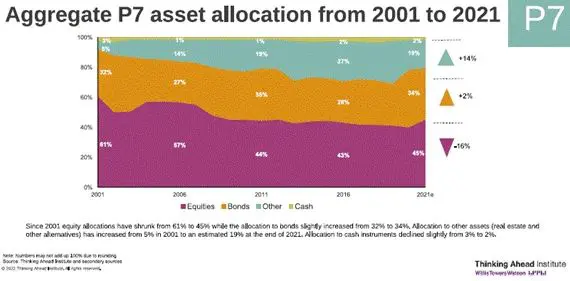
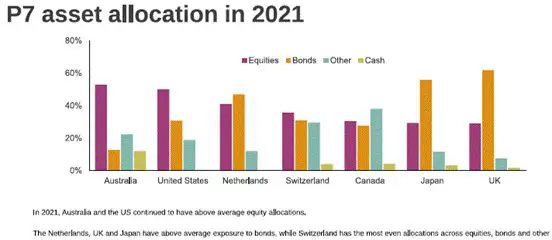
Banks, Pension Funds, cooperatives, and Credit Unions reportedly need to earn at least 8% to remain solvent and today they cannot rely on Bonds or Treasury Notes to earn enough to survive. Their need for more income prevents them from relying on Fixed Income instruments and forces them to rely on speculative investments in junk bonds and the stock market exchanges, to survive. The last 50 years of company consolidations and pension Fund bankruptcies reflect the speculative nature of their investments.
Introducing Stable Gold Collateral (SGC™) corporate bonds and the MONDRAGON cooperative business model by IPC CoOp (Nevada) will alter the investment playing field in North America and hopefully save many local Banks, Pension Funds, cooperatives, and Credit Unions from bankruptcies and collapsing over the next decade.
What is a Stable Gold Collateral (SGC™) Bond?
Stable Gold Collateral (SGC™) corporate bonds are a unique new bond type issued with the aid of the Singapore Bullion Bank Group (SBBG).
The SBBG insures a zero-coupon SGC™ bond with an 8.8% compound interest rate return. To assure interest payments and bond repayment, the bullion bank requires that the bond issuer deposit 40% of the issuer’s SGC bond revenue into a sinking fund as physical gold (assets) owned by the bond issuer. The bond “issuer” collateralizes its SGC™ bonds with that gold sinking fund, to ensure bond price stability for open exchange trading over the life of the bond.
The new bond uses this gold sinking fund payment method for also making the biannual collateralizing in gold at its current rate. The sinking fund also ensures repayment of 40% of the SGC™ bond at 8.8% annual compound interest (Preserved Capital) at the end of its period.
When compared to stocks in the past, Corporate Bonds typically have a lower risk but a fixed rate of return. However, in comparison with other bonds, the new SBBF SGC™ bond, 40% backed by gold collateral, will rate far less risk and have a higher rate of return than other bonds.
This new bond type will be extremely valuable to certain types of Fixed Income portfolio managers and Fixed Income investors. Today, for example, most pension funds receive a small contribution to cover a large future retirement payment. To make the actual future payment typically requires the retirement fund to achieve 8% returns on its investments. This high rate of return was not available via a safe bond investment until now.
The new zero-coupon SGC™ bonds offer an 8.8% compound interest rate return and, thanks to the 40% gold bullion collateral set aside, the SBBF bullion bank) guarantees a 4% rate independent of the issuer (or assignee. The 8.8% produces a higher yield compared to the typical government or corporate bonds, and money market funds.
The 4% bullion bank guarantee alone is currently a higher guaranteed return than other bonds on the market today (1Q2022). The Gold collateral covers the bullion bank guarantee in the bank, independent of the issuer or subsequent assignees.
The bond issuer, or the bullion bank’s re-assigned owner, contributes twice a year to a collateral sinking fund, using ounces of refined gold. Issuers, or the re-assignees, stabilize the biannual gold payment through dollars (or optionally USDX). The gold “stabilization” bullion bank process means that the number of ounces being paid to the bullion bank varies with the then-current price of gold.
If the market price of gold rises, the number of ounces owed to the sinking fund falls. If the market price declines, the ounces owed increase. This “Stable Gold Collateral” (SGC™) gold sinking fund subjects the borrower, and the bondholder, to less market force risk versus holders of a government sovereign gold bond (India’s for example, which only pays interest of just 2.50% per year, for only eight years.
The interest on “Zero Coupon bonds” (such as SGC™ 5 Yr., 10Yr. 20Yr, and 30Yr bond offerings) is compound interest, not simple interest.
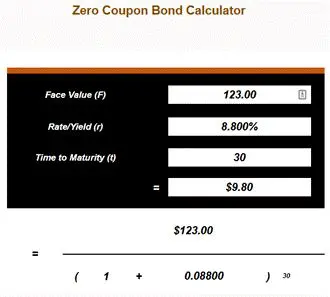
Because of compounding interest, the face value of a 30Yr., 8.8%/yr. SGC™ bond is over twelve (12) times the initial purchase price of the bond. This process provides the bond owner inflation protection for the first time.
American economists envy the success of the MONDRAGON cooperative business model in the Basque country of Spain. Sadly, launching new purchasing cooperatives to offset a steady rise in companies’ gross margins on consumer goods has been impossible, until now, because cooperatives can only sell stock to their members and a new cooperative simply lacks enough members to get off the ground.
A coop startup could not sell “junk bonds” in the past (before 2022). A startup cooperative could not avail themselves of GILT-EDGED HIGH-YIELD™ (SGC) bonds before 2022, since they did not exist.
Bullion Bank, the new gold asset-based virtual currency
SBBG’s new SGC™ bonds enable other issuers to finance long-term investments such as retirement funds and government-enabled bond programs, where Fund Preservation and Generation of Income are critical.
This golden safety net for long-term capital earnings is uniquely different, compared to the current use of sovereign gold bonds, such as those from India. The Indian gold-backed bonds, for example, are being used for speculation.
The bullion bank-backed bonds are also unique compared to other private securities. Forty percent of the new SGC™ bond’s yield comes from gold collateral assets, making a high yield stable and virtually impervious to risk factors like inflation, interest rate affected yield, and the market growth rates.
8.8% yield with gold collateral backing makes CARRY TRADE in SGC™ bonds a minimal risk. [i]
The Singapore bank (SBBG) selling bonds, backed by gold bullion, enables its CARRY TRADERS to buy and become “golden” collateral for loans and trades.
In 2009, Paul Mercier, then deputy director of market operations at the ECB, said: “gold remains the ultimate and global means of payment that is still accepted and it is one reason used by some central banks to justify gold holdings.”
The low-yield sovereign gold-based bonds in use today have gained considerable support from financial markets like the EU because of their efficiency in crisis management. Italy, India, and Sweden have all used gold as collateral for loans.
“The hedge that the gold collateral would provide against the default (as an example of an extreme event) would attract investors such as emerging-market governments and sovereign wealth funds. If the countries such as Portugal or even Italy were to default, the price of gold might skyrocket in euros (Baur and Lucy 2010; Saudi and Scacciavillani 2010; Farchy 2011).
However, because Central Banks control countries’ gold, not national treasuries, and the EU treaty prohibits direct financing of governments by central banks, corporate bonds have the upper hand over gold collateral.
LCH Clearnet, ICE, and the Chicago Mercantile exchange have also accepted gold bonds as collateral for margin requirements for derivative trades.
Although the legal element of gold-backed bonds is controversial in parts of the world, large markets like the U.S. and the EU support these securities. The large markets benefit from transferring the credit risk from individual issuers and institutional purchaser levels.
While recent academic research has provided accumulating evidence that a market basket of PEs (private equity stocks) outperforms Bonds based on the S&P results, that outperformance is only about 4% per year. This level of potential outperformance is comparable to the bullion bank guarantee of earnings, independent of the issuer.
SGC™s are also more efficient to trade in compared to private equity (PE) funds because of SGC™s’ greater flexibility to traders. The unique lowered level of risk, the general resilience to market volatility, and the long-term, built-in stability all reduce the risk of market instability. SGC™s even afford greater liquidity and transferability than private equity funds because of the greater investor confidence and lack of dependence on risky assets.
The collateralization of bonds with a commodity (gold) that is itself being traded in the market at stable market prices and reduced market volatility makes it easier to value the gold-backed SGC™ securities, acquire them, and transfer them. It would be easier for investors to gain and transfer GILT-EDGED HIGH-YIELD™ SGC™s whenever they wish.
Based on these benefits, SGC™s yielding 8.8% will offer greater benefits than private equity funds and could soon displace the latter to increase stability both in financial markets and in pension funds’ portfolio valuations.
The drop in bond yields over the years has been under study as governments moved away from the gold standard for the valuation of currency. This transition should have no bearing on the yield or stability of the new bullion bank-backed SGC™s
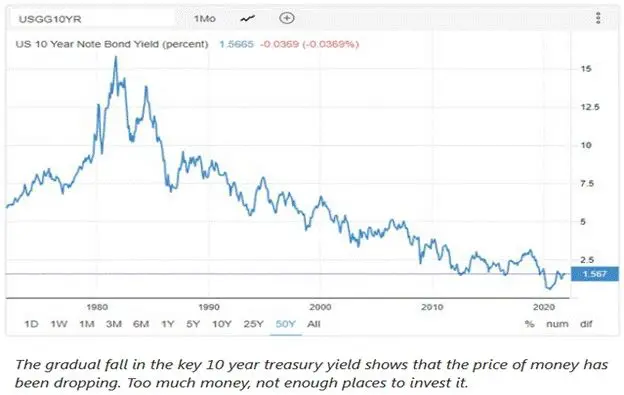
Advantages of Buying Stable Gold Collateral Bonds Vs. Other Fixed Income Choices
A debtor often pledges a physical property asset as collateral to qualify for a loan. If the borrower defaults, the creditor can seize the collateral asset for repayment. The property purchased with a loan illustrates the use of physical collateral. Companies also issued bonds with no collateral. These promises to pay bond instruments (so-called Junk Bonds) will continue as an alternative source of funding.
The usage of collateral helps to reduce default risk. Unsecured debt instruments have higher borrowing costs than secured loans. For almost one hundred years, gold was the world economic program’s stable currency. Gold’s importance as currency and collateral diminished. Gold is no longer the reserve currency. However, since the Economic Crisis of 2007, gold has again become a popular form of collateral across the globe (Christesen & Bhagavatula, 2022).
For instance, Basel III’s higher capital standards increased the value of gold as collateral. Considering its status as an economic property, this is predictable. Gold is, without a doubt, a greater and more stable investment asset.
It is also worth noting that the gold market is volatile across all schedules. We can use gold as collateral. Someone with gold can loan because of consistent value, even though it is not a producing commodity like gas and oil (Dennison, 2018). The gold lease cost is the interest as an amount of gold, while the gold advance offered rate is the interest rate on a U.S. dollar loan guaranteed by gold as collateral. Bonds–zero-coupon or coupon–and corporate deposits are examples of fixed-income securities issued by a corporation or a sovereign authority, such as the state or a city.
When the economy is in chaos, individuals look to gold as a haven. As a result, we employ gold as a protective tool versus a wealth generation source. Financial analysts recommend that gold ownership should account for 20% of one’s investment (Dennison, 2018). Incorporating gold into an investing strategy can help to mitigate the effects of market and economic uncertainty on earnings.
The yellow metal also aids in the risk management of equities and debt investments.
Fixed-income instruments can also help mitigate overall risk in an investment portfolio and safeguard against economic uncertainty (Dennison, 2018).
Stable Gold Collateral bonds create a protection advantage over private equities instability. Bonds (short to medium) have shorter timeframes than commodities (stocks). As a result, people have considered gold collateral bonds a better bargain than equities. Bonds also have less day-to-day fluctuation than equities, and their investment returns sometimes are greater than the average determinants of dividend distributions.
Zero-coupon, Stable Gold Collateral bonds (SGC™s) are a new type of exchange-tradable asset that is collateralized with gold. Since these bonds have a low risk, their associated yield is far less than private equity funds (Maltritz & Berlemann, 2016).
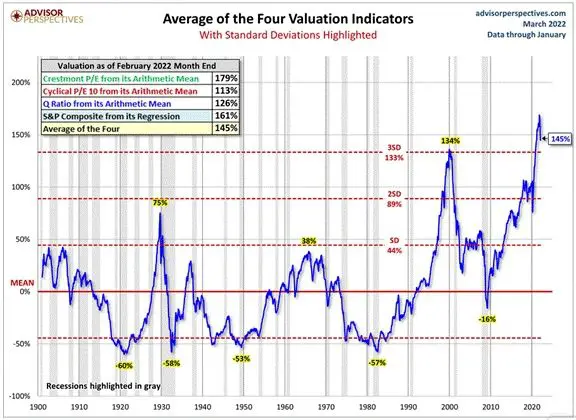
However, SGC™ bonds issued by the Singapore Bullion Bank Group (SBBG) and collateralized by gold bullion assets generate returns at an annualized rate of 8.8% or more. That annual yield is substantially higher than the prevailing risk-free rate from treasury bonds.
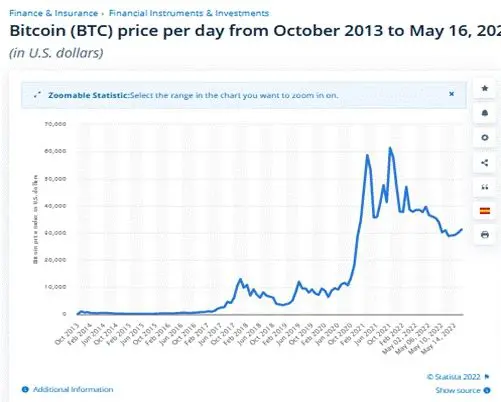
While cryptocurrencies such as Bitcoin have proved very useful as international mediums of exchange, history shows that cryptocurrencies are not a “store of value.” Trading the Cryptocurrencies for SGC™ bonds on global exchanges at a consumer coop would enable the holder to achieve ‘store of value’ asset values.
Lacking gold stabilization, yields on sovereign varieties of gold-backed bonds such as India’s, may, sometimes, be lower than private or asset-backed securities (Block et al., 2021). Based on precedent, the valuation is simple.
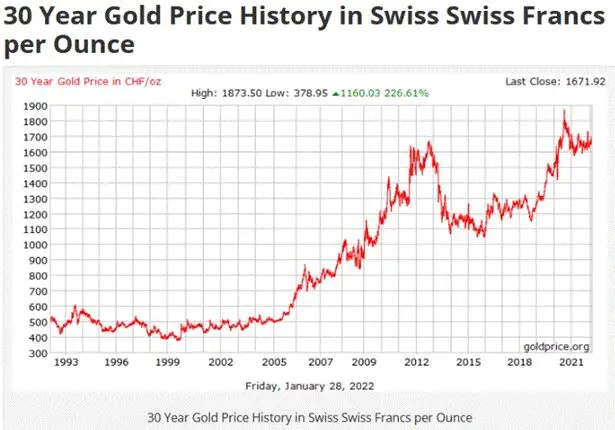
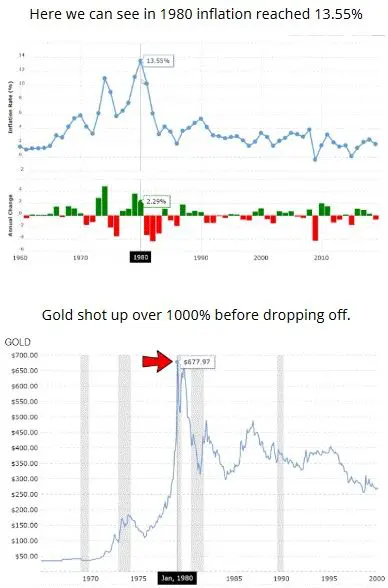
In 30 years, the price of gold rose over three times its value (see above).
If someone pays $10 (including a 2% fee) an 8.8%/yr. yielding 30-year, zero-coupon SGC™ bond grows by over twelve-fold. Gold collateral alone ensures five-fold.
Speculators in India’s gold-backed bonds time their entry to the inflation rate calculations:
Markay Latimer trades
Risk and Bullion Bank Stability
When analyzing gold-backed securities, investors must balance their yield and associated risks. The secured investment with low risks may minimize investors’ returns but selecting non-SBBG bonds. Such bonds not backed by gold assets raise the risk of losing one’s investment.
Retired people and Pension Funds can forecast how much money they will have in subsequent periods with better accuracy if they purchase SBBG’s SGC™ bonds.
SGC™ bonds and India’s bonds trading in markets is a natural expectation. Stockbrokers also expect “more frequent trades” in India’s speculative bonds.
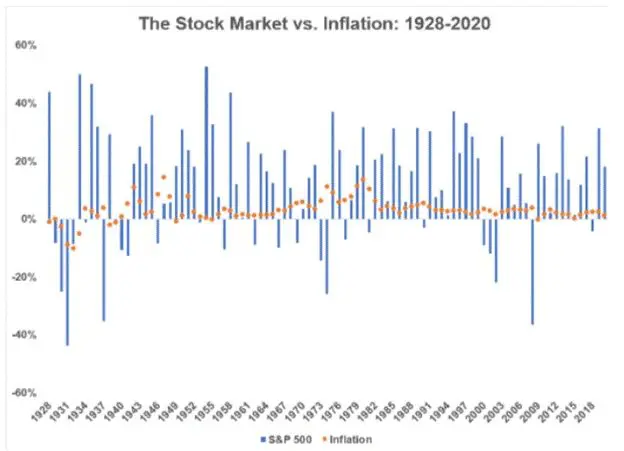
Equities can decline 10% or more in a year, so if SGC™ bonds make up a component of the investment portfolio, they can help smooth out the peaks and valleys when an economy or the price of gold crashes (Christesen, & Tierney, 2022).
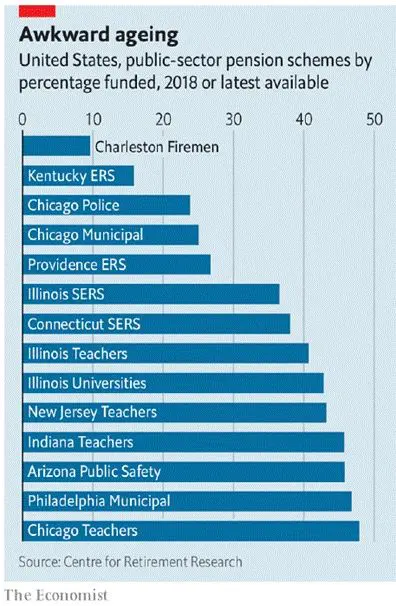
A decade ago, Warren Buffett, the Oracle of Omaha, warned about pension underfunding. Today, baby boomers’ grandchildren have graduated from college and these boomers are less interested in paying taxes to support teachers’ pension funds.
What are the alternatives and risks?
Bonds allow ambitious students (and their guardians) to forecast investment gains and measure the cost they will need to deposit to build a school savings account by the moment university begins. SBBG SGC™s optimize these two factors to protect the investment and ensure that people benefit from their investments.
ETFs (Exchange Traded Funds) have become popular as large economies like the European Union (EU) continue to discuss the idea of backing their new sovereign debt with gold (Maltritz & Berlemann, 2016). However, the benefits of SGC™s over other securities are debatable. This treatise explores the advantages of SGC™s compared to other fixed income (private equity choices), which will inform future investors and their investment decisions.
Stable gold collaterals (SGC™s) have lower risks than conventional securities. This text explains how SGC™s have a stable yield rate and are less prone to risky market forces. Unlike private securities factors like inflation, interest rates affect whose yield, and the market growth rates, the flexible way it tied the sinking fund to gold stabilized SGC™’s yield.
According to Maltritz and Berlemann (2016), the dealing spreads in gold-backed securities are lower than in physical gold and other securities. Investors can estimate their earnings with greater accuracy and make informed decisions.
The low influence of factors like inflation also makes SGC™s stable investments that offer significant shields against losses (Cheung, 2019).
These investments are the best choice for those investors who seek moderate earnings at lower risks. Block et al. (2021); add that private equity funds face greater compliance risks than SGC™s and could thus raise legal issues. Although the yield rate may reduce because of the collateral element, investors receive the bullion value at the end of the maturity period.
An 8.8% SGC™ bond’s value rises over twelve-fold in thirty years, outperforming the rise in gold’s price in the last thirty years by far.
Stable gold collaterals (SGC™s) are due to be supported by many large markets. The collateral is also more efficient in crisis management. Although the legal element of SGC™s is controversial in parts of the world, large markets like the U.S. and the EU (Belke, 2012, support gold-backed securities).
The reason for this support is that ETFs have a long history in these markets and have proved effective over the years. For such reasons, the EU market acknowledges that SGC™s could bring greater benefits to investors within its markets by allowing them access to investments that offer high yields at reduced risks (Belke, 2015).
We expect that the stability that SGC™s offer compared to private equity funds could offer market stability in the euro context and any dollar crises. While comparing the benefits of SGC™s and outright monetary transactions (OMTs), experts from the EU market argued that investors could benefit from credit risk transfer at both individual and institutional levels (Belke, 2015; Maltritz & Berlemann, 2016).
The support of the ETF by large markets creates confidence among investors and a conducive market environment for the securities. SGC™s may experience stable growth when more people are becoming skeptical of asset-backed or private equity funds that lack consumer protection and oversight (Block et al., 2021; Maltritz & Berlemann, 2016).
Unlike private equity funds, SGC™s are also more efficient in crisis management, since they have lower volatility than other securities (Cheung, 2019). Every day Americans are being priced out of homeownership. SGC™s can provide a better option for investors to shield themselves from risks that arise from market uncertainties and unexpected crises. A move by several governments to integrate SGC™s into their core financial/ investment vehicles is likely to be quite reassuring and could see major growth in these securities over private equity funds.
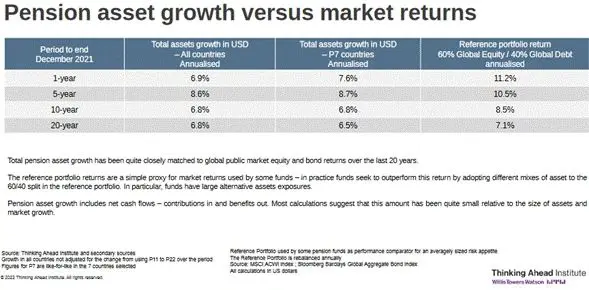
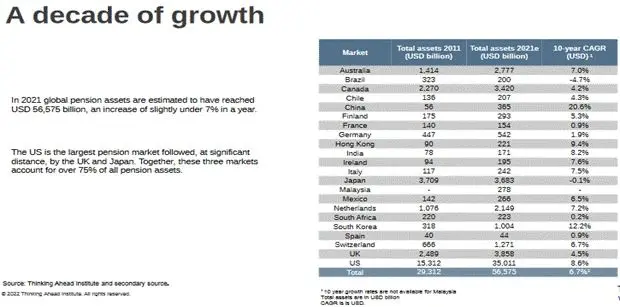
The National Association of State Retirement Administrators determined that the average state public pension plan assumed its investments will earn an annual rate of 7.72%.
Stable Gold Collateral (SGC™s) is easier to trade than private equity funds. Although private equity funds are more common and more widely traded than SGC™s, we criticize private funds for their lack of standardization and logistical problems (Block et al., 2021). SGC™s provide greater flexibility to traders because of their ease of stock market trading and low-risk level.
For instance, the collapse of private equity funds, like mortgage-backed securities (MBS) caused the greatest monetary crisis in recent history. The crisis sent the entire world into a recession in the late-2000s (Block et al., 2021).
Unlike the mortgage value that backed the securities, gold is not prone to fluctuations in market prices and inflation. SGC™s are also more resilient to harsh market conditions, such as recessions and depressions. As explained earlier, the efficiency that SGC™s provide is one of the core reasons the EU promotes them as a solution to the market crises that occur (Maltritz & Berlemann, 2016). Replacing other funds with SGC™s could thus create greater efficiency in the market and increase trade in securities.
The liquidity of stable gold collaterals (SGC™s) is unmatched by private equity funds. As explained earlier, we associate the latter with greater market risks despite promising higher yields to investors. However, experts will argue that SGC™s can provide greater liquidity and transferability than private equity funds because of their lower risk rates and greater investor confidence (Block et al., 2021; Cheung, 2021).
The complexity of private equity funds also makes them less desirable than SGC™s. According to Block et al. (2021), private equity funds with limited distribution partners become difficult to liquidate in a crisis. It would take longer for investors to gain these funds and liquidate them.
Gold-backed securities differ from stock shares, since they are not dependent on risky assets or income growth. Besides, the collateralization of these stocks with a commodity that is traded on the market at stable market prices and reduced market volatility makes it easier to value SGC™ securities, acquire them, and transfer them.
Conclusion
SGC™s from cooperatives have a yield rate of 8.8% today. Someday, Stable Gold Collateral bonds (SGC™) may have a low yield, even as compared to private equity funds (PE). Investors may then need to keep their securities for an extended period to accumulate compounding returns.
Today’s SGC™s will yield up to 12-fold their original value if their maturity is a whopping 30 years. This waiting time may be too long for certain investors, including those who invest their savings in trusts or after retirement. Ten-year and 20-year SGC™ bonds will probably become available for children’s college tuition.
Private equity (PE) funds could yield between 10% and 14% when invested for ten years, with long-term ones generating annualized return rates as high as 25% over a 30-year investment duration (Block et al., 2021; Gompers et al., 2015). Investors who select private equity funds could have higher returns within a shorter duration than their counterparts who invest in SGC™s.
However, this does not mean that SGC™s will have the lowest yield in the market. According to Gompers et al. (2015), SGC™s have a remarkably high yield compared to risk-free bonds and their risks are not as high as those associated with private equity funds given SGC™’s 4% annual yield guarantee from their gold collateral.
It is important to note that the nature of assets that back private security funds makes PE prone to market risks. Investors may thus incur huge losses while awaiting high returns from their investments. Investors should be more cautious when selecting private equity funds since they have higher risks despite having shown better yields than SGC™s.
In summary, we have traded gold collateral bonds in EFTs for a lengthy period. Although these securities have lower returns than private equity funds, they carry fewer risks and thus offer a better guarantee for investors. Here, investors would find it easier to earn from their investments without having to diversify their securities. The additional securities, SGC™s backed by large financial markets, would become a replacement for other types of securities.
Unlike private equity stocks, SGC™s offer investors greater efficiency and higher liquidity. It would be easier for investors to gain and transfer SGC™s whenever they wish. Based on these benefits, SGC™s offer greater benefits than private equity funds and could soon replace the latter to increase stability in financial markets.
References
Advisor Perspectives (7 March 2022) https://www.advisorperspectives.com/dshort/updates/2022/03/07/is-the-market-still-overvalued
Alderman, C. (2020). Teacher pension plans are getting riskier—and it could backfire on American schools. Retrieved from https://www.brookings.edu/blog/brown-center-chalkboard/2020/02/25/teacher-pension-plans-are-getting-riskier-and-it-could-backfire-on-american-schools/
Baur and Lucy (2010)
Belke, A. (2015). Gold-Backed Sovereign Bonds: An Effective Alternative to OMTs. Financial Crises, Sovereign Risk, and the Role of Institutions, 7–23. https://doi.org/10.1007/978-3-319-03104-0_2
Buffet, W (2014). Letter to Berkshire Hathaway shareholders.
CARRY TRADE https://www.investopedia.com/carry-trade-definition-4682656
Cheung, H. (2019). Gold and international finance: The gold market under the internationalization of RMB in Hong Kong. London: Routledge.
Christesen. Z. & Tierney. A (2022). Current pension plans are not helping recruit and keep teachers. Retrieved from: https://reason.org/commentary/do-pension-plans-help-recruit-and-keeps-teachers/
Dennison, T. (2018). Alternative Assets from Gold, Commodities, Art, Fine Wine, and Other Collectibles to Private Equity and Hedge Funds. In Invest Outside the Box (pp.. 115-152). Palgrave Macmillan, Singapore.
Farchy (2011)
Gompers, P. A., Kaplan, S. N., & Mukharlyamov, V. (2014). What Do Private Equity Firms (Say They) Do? SSRN Electronic Journal, 1-63. https://doi.org/10.2139/ssrn.2447605
Hartley Hirt, Geoffrey A., & Danielson, Bartley R. (2021). Foundations of Financial Management. New York, NY: McGraw-Hill.
Maltritz, D. & Berlemann, M. (2016). Financial crises, sovereign risk, and the role of institutions. Erfurt, Germany: Springer.
Markay Latimer trades (2022). Spring ’22 Trading.
Niraula, A. (2019). Study: State Pensions Are Badly Trailing Their Investment Return Assumptions. Retrieved from https://reason.org/commentary/study-state-pensions-are-badly-trailing-their-own-investment-return-assumptions/
Oxford University Press (2014). The Oracle of Omaha warns about public pension underfunding.
https://blog.oup.com/2014/05/warren-buffet-public-pension-underfunding/
Saudi and Scacciavillani (2010)
Thinking Ahead Institute (2022). Global Pension Assets Study|2022. Retrieved from https://www.thinkingaheadinstitute.org/content/uploads/2022/02/GPAS_2022.pdf