
The Cloud Security Framework’s Evolution and NIST 2.0.
Understanding and learning about the National Institute of Standards and Technology (NIST) and its Cybersecurity Framework for the future is happening now.
By Howard Gunn
NIST is a non-regulatory government body. They identify issues, problems, and the need for new Protective Technology.
Their Cyber Security framework should also help you protect your informatization (material in human consumable form) and your data (binary bits and bytes representing your information in digital form).
They are also the world leader in driving critical standards, promoting modern security solutions, and facilitating new standards and processes that stimulate innovations and improve our quality of life.
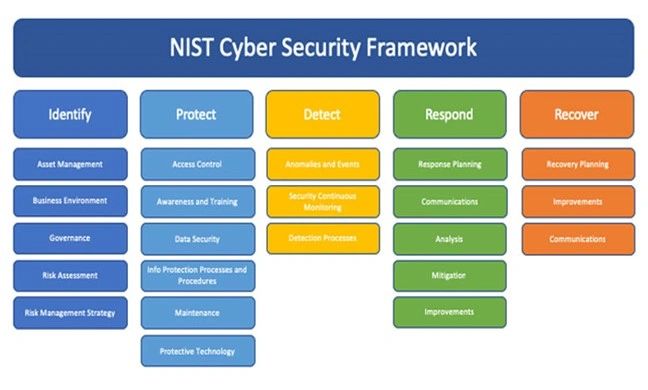
Their “Protect” process begins with Access Control Awareness and Training. Data Security on the network, Info Protection Processes, and Procedures maintenance lead to operational functionality.
The last step to “Protect” is new Protective Technology to improve Protection.
Recent NIST History and Impact
Their Cyber Security 1.0 report was issued in 2014.
The guide focused on protecting critical infrastructure. It also expanded the scope of security controls and guides organizations of all sizes. The report also kicked off many new product ideas and new applications.
The Internet Engineering Task Force, IEEE standards groups, chip makers, entrepreneurs, and software application providers responded.
Some developers even got government grants that were awarded to help develop new standards. New technologies were also created through the grant programs created by NIST.
Release 1.0 on cybersecurity and its grants set in motion a vast amount of new technology and standards activity.
Many of the new insights and new ideas are now in the market (AI, ML, VR, AR, neural networking, and quantum computing) while others are already being embedded in the network’s access, clouds, and edges.
The ongoing State and Local Cybersecurity Grant Program (SLGCP) for state, local, tribal, and territorial (SLTT) government is a sample of the grant and implementation model. These entities are all working on developing new technical solutions.
As an example, cybersecurity risks in the SLTT-owned and operated information systems received grants totaling $200 million in 2022.
$8.5 million of the grant went to Homeland Security trying to secure the Internet and reduce data breaches.
$500,000 went to the Inspector General’s office. They produce an evaluation of the grant’s performance and progress. They will also report on the additional security measures and techniques developed by the grant.
The grant process will continue to include new encryption processing, securing systems, and resiliency to defeat cyber threats.
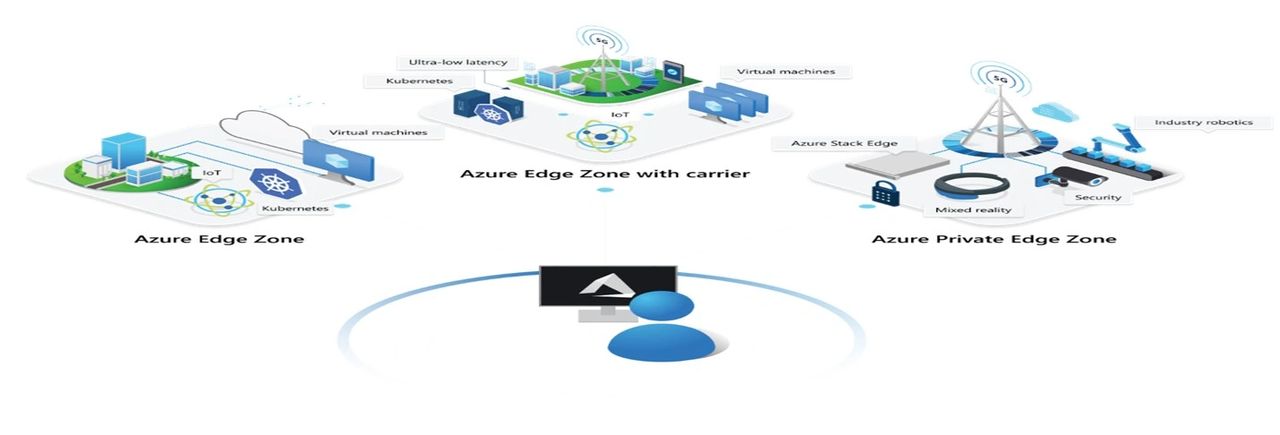
Microsoft, for example, announced its new network edge private computing initiative. The network design became a part of their new Azure Program. This evolution is an indirect result of NIST 1.0 and the grant processes.
The new technology and breakthrough actions from Release 1.0 projects are just coming to market after standards and development efforts.
Many new technologies are already used after the new standards were developed and adopted. Wi-Fi 6, 6E, and WAP 3 security for personal users, home offices, small businesses, mobile users, travelers, and social/political/financial organizations is the most recognizable cybersecurity upgrade in the market.
Wi-Fi-6/6E, Wi-Fi Protected Access 3 (WPA3), mobile mesh networking, and 5G cellular-millimeter wavelength deployments are online and still developing.
802-11 ax, 100 gig E, non-terrestrial Networking Technology, Distributed Antenna System (DAS), DAS 5G Alliance, and Radio Access Network (RAN) are other advances produced by technological developments coming to market.
Quantum computing-based cloud services technologies entered the Cloud service market for the first time in 2023.
Quantum computing could revolutionize chip designs and make all previous computing technologies obsolete. It also offers enhanced problem solutions now that we can connect people with Wi-Fi 6/6E and WAP 3 to new computing technology that did not exist in 2014.
Technology upgrades have also made AI, ML, VR, and AR applications practical and extensible to consumers.
These technology upgrades create new network edge computing and premise edge computing models that are practical and important to developing the future secured Internet and quantum computing analytics.
Microsoft Azure and similar products are changing the computing landscape.
Network edge and Premise edge computing make the smart campus, smart communities, and smart cities of tomorrow possible, today.
Network edge computing moves the Computing Power closer to users to reduce latency and improve consumer performance and response times.
Premise edge computing adds new site-based gateways, firewalls, handheld computing, and wearable technology more secure and less vulnerable.
NIST version 2.0 was released in 2024.
It identifies an expanded set of high-visibility problems and new technical priorities.
Many identified items result from the modern mobile mesh, neural networking, and Peer-to-Peer (P2P) transaction privacy successes in NIST version 1.0 results.
The new quantum computing, P2P compacting, WAP 3, and new distributed processing for consumer cyber-currency are entering the market.
Devices with the new non-hosted connectivity and security technology are shipping.
A rebuilding of the current Zero Trust Network Architecture (ZTNA) of the Internet is underway. Our new cyber-currency market itself is approaching $5 billion in value.
In addition, new technology has also been promoted in the recent NIST 2.0 release. Compacted quantum computing plus other upgrades are coming. They will help repair the breach, phishing, and ransomware holes in the ZTNA-based Internet and Cloud Services sector.
The new NIST cybersecurity release 2.0 also faces the additional problems being caused by the 1.0 decade of successes.
The roll-out of these new technologies for enterprises, Government Agencies, and big businesses has not reached as far into general use by consumers, travelers, and residential and wireless service subscribers.
Electronic identity theft now occurs every 20 seconds of every day all year long. Three thefts per minute, one hundred eighty thefts per hour, and four thousand three hundred and twenty per day is a data point in the US.
The one thousand eight hundred (1800) data breaches rate is another significant data-point milestone we passed in 2022. It continues to increase.
Three million ransomware attacks were attempted and became a significant new data category by 2022.
With the addition of five billion malware and hacker attacks, a release of 2.0 on cybersecurity became imperative.
Understanding the current new technologies and the transformative applications and getting them to the consumer market is as critical as releasing NIST 2.0 to the IT/OT developers.
Successful Phishing is the primary way to launch a data center breach or ransomware attack on a data center.
The new anti-phishing, anti-virus, and private computing (P2P) technologies, combined with new mobile ad hoc mesh networking technologies, should all be available in the consumer market by 2025.
Awareness and Training Learning Objectives NIST 2.0
- Help consumers understand how new standards are stimulating modern premise edge computing power and AI applications for personal privacy, and Information Security (Info Sec).
- Help small users understand the benefits of upgrading to Wireless Access Point (WAP 3), router, firewall, and gateway upgrades to their wireless connectivity on the Internet.
- Enterprises, Government Agencies, and Big Businesses have IT (Information Technology) and Operating Technology (OT) departments.
- These departments are dedicated to maintaining and developing better employer privacy, information security, and data security policy execution points security.
- Large corporations and government entities also focus on secured data connectivity for their Information Services (IS).
- For many years, Operating Systems (OS) automation avoided internet connectivity. The network’s inherent latency, lack of trust, and ease of penetration were major roadblocks. The industry is now trying to fix these problems, although a separate Industrial IOT (IIOT) may continue to operate at the Enterprise level for the foreseeable future.
- Both groups (Industry and government) also focus on the early adoption processes.
- They are usually early adopters to comply with regulations and use the new standards and modern products to gain a competitive advantage and improve profit margins.
- Individual consumers, families, small businesses, private local organizations, legal/medical offices, public Wi-Fi providers, and cellular (wireless) carriers are left to learn about the new stuff from public sources.
- This is an article to help the public learn the jargon and benefits of new standards, and modern AI, ML, AR, and VR applications.
- Helping cities, towns, and local communities understand the power of Smart Cities is a must-achieve aim for NIST.
- Smart cities have been promised by the technology suppliers since 2005 and virtually none exist at the consumer level almost 20 years later.
- License plate readers on street corners, security cameras, and traffic control signals are a start down the path to a smart city.
- Facilitating the safe and secured “first mile” wireless consumer access to the internet as a utility service is an exciting and easy next step with today’s modern RAN technology.
- Cities and communities must learn how the new premise of edge computing privacy and security applications can better protect consumers. The protection process became a key extra step in the progress toward smart campuses, communities, and cities.
- Small businesses, individuals, homes, apartments, travelers, off-premises workers, and ad hoc groups of employees and community groups need help.
- The first mile of networking does not protect their onsite LAN.
- Their data is not protected in transport over the Zero Trust Network Architecture (ZTNA) of the Internet. It is also unsafe in storage like email attachments. Public network access is now one of the most dangerous things you do.
- Consumers need to learn about the benefits of secured AI/ML-driven premise computing gateways, firewalls, and controllers. These extra elements will also include new personal policy controls you can have over your private information and data. You can now even protect your private information on remote devices, based on the developing P2P standards.
- Understanding the real-time automated privacy applications coming from premise and edge computing, ad hoc virtual mesh networking, and AI/ML automation technologies is difficult. Much like cryptocurrency, many will learn.
- Many will also learn how to benefit from the new Internet of Things (IOT).
- Consumers need to learn how to secure their sites and devices.
- Their privacy probably means new premise edge computing automation, smarter gateways, and new AI/ML gateway applications to create premise privacy and security.
- Also, consumers must learn how to use the developing premise edge computing power and applications, to protect their privacy and even their location in time and space.
- These new applications and appliances can secure your applications and your devices, plus give you policy-controlled information over the Internet and Cloud Service.
Access is a double-edged sword
Premise Edge Computing uses its local processing power and software applications to protect your Network Edge connection from hackers, phishing, and ransomware attacks.
It can also secure your proprietary information and digital data while being transmitted over the Internet or stored on cloud services like email and messaging.
New standards in the market and P2P applications are helping to bring better products and new applications to the premise edge and between endpoints.
Things like compacting technology, virtual Peer-to-Peer gateway controllers, and virtual ad hoc mesh VPN connectivity standards did not exist in 2020.
AI, ML, VR, and AR only existed in game rooms and on movie screens.
By 2025, new technology standards and new applications will enable the information sources to execute user policy controls over the information consumption at the receiver end of a transaction for the first time.
The source can now control whether the receiver device and user can read the digital data file you sent.
Processing information in digital form (bits) to create new information is the traditional realm of latency-tolerant Information Technology (IT).
IT computing and processing power can be local (user device) or distributed between local processors and host computers.
These “processing” elements are tied together via a “networking” transmission system. The transmission and new P2P software applications will protect many of today’s modern Information Services (IS).
Local IT devices can also support Peer-to-peer (P2P) networking and services.
No centralized host computer controls the P2P services.
The client/server services and P2P services are both produced by application software. New standards are developing to make these processes more secure.
Processing power and client-server connectivity with data centers are now available within a wide range of smart personal devices, from PCs, phones, wearables, and tablets.
Modern TVs, vacuum cleaners, refrigerators, plus various security devices and wearables also have this kind of IT ability.
Kiosks and libraries full of PCs are also nearby to give free use of IT/IS functionality to most consumers. Free unsecured Wi-Fi networking access is also abundant on many commercial building sites.
Self-driving vehicles, telehealth, and satellite (non-terrestrial) bypass of the Internet are nearing their adolescent stage of development.
An ICU level of health monitoring processes at home and on the road are in their infancy stage.
New medical monitoring and AI-enabled predictive coding processes and data collection from implanted health monitoring devices are also in their infancy.
Latency-sensitive Operating Technology (OT) has often been responsible for ingesting raw data and converting it into useful information.
Real-time processing is used for making predictive insights, sound, movies, pictures of galaxies, messages, medical diagnostics, notifications, and automation actions in near real-time.
SCADA (Supervisor Control and Data Acquisition) System controls many processes, like launching rockets and boarding, flying, and landing commercial airplanes.
Real-time processing and Operational Systems (OS) are also used for automating factories, controlling nuclear power plants, and managing the delivery of electricity, gas, water, the Internet, and even packages from Amazon, UPS, Federal Express, and your local restaurant.
Both IT/IS and OT/OS are operating and available at home and in most buildings.
They are also bundled with local security systems, a variety of unique devices, sensors, cameras, TVs, doorbells, driving systems, and even vacuum cleaners, refrigerators, and license plate collectors on the street corner.
Both IT/OT technologies and applications use developing ethernet standards, TCP-UDP/IP standards, and new local wireless transmission standards and systems (Wi-Fi/Bluetooth) to move data from a sender to a receiver device.
These upscale premises are based on the Local Area Network (LAN), and standalone or separate WLANs (wireless LAN) that seem to be everywhere.
While public connectivity services are not up to the security standards of Industrial IOT, they will improve as the new standards get implemented in new consumer products for the premise edge of the network.
The Internet interconnects the LAN/WLAN site connectivity infrastructure and computer devices on demand of the source device and not the service provider on the ZTNA of the Internet.
Virtualizing these services with P2P connectivity for the premise is just coming to broad-scale use in the market.
The Internet itself is an unsecured connectivity process.
It developed from what was called the Arpanet. Both were built to facilitate digital communications between data centers and dumb I/O keyboard terminals and printers.
Actual Information (data in human consumable form) security and personal privacy issues were left to the users and their PCs acting like terminals.
PCs and premise edge computing were in their infancy stage as the ZTNA Internet connectivity system was being built. The modern Internet phase debuted in the early 1990s with Hypertext Transfer Protocol (HTTP).
This standard was used to connect client browser applications running on PCs with WEB-hosted pages and new Web-enabled business sites.
The original non-HTTP Internet process for computers communicating with computers and dumb terminals is now called the dark web.
I am unsure about the number of server farms in the stairwells at work or the number of minicomputers in the redesigned lunchrooms around the country in 1990.
About 300,000 internet-connected PCs and three million internet terminal users existed in the early 1990s.
However, by 1998, you could use Google to peruse information, select it, and retrieve information and files from random sites, without an FTP session.
Apple was a struggling PC maker in the early 1990s.
Microsoft was soaring along with Intel.
Radio Shack (Tandy) and Commodore were the primary PC suppliers to crazy users doing personal computing applications.
Dell distributing Chinese PCs and Cisco selling routers, ran the traditional IT companies like IBM, Compaq, DEC, and HP out of the PC and connectivity business by 2005.
About six hundred and fifty million (650m) PC-based information creators and information consumers were using unsecured personal computing devices over the ZTNA Internet to reach secured data centers in 2005.
By 2015, Apple data devices had done the same “run them out of the computer user business” model to the old phone makers.
Today, we have about 22 billion internet-connected devices, serving 5.3 billion users. They are served by about ten thousand ZTNA data centers. We expect 30 billion internet devices and fourteen thousand data centers by 2030.
Security Enabling Networked SCADA
An extra level of transport security was added to the ZTNA in the 21st century.
The HTTPS upgrade for connecting personal computing devices to data centers and other user devices (peer-to-peer) grew.
Security needs that drove the S onto HTTP also drove the processes of encryption for protecting data traveling over the Zero Trust Network Architecture (ZTNA) of the Internet.
“The Facebook” service that started in 2004, became just Facebook in 2005, as a sign of the new social media application phase of the ZTNA of the Internet.
Anti-virus applications to protect user devices and VPN applications to hide your location from hackers and crackers developed.
These processes helped protect devices and help secure data connectivity and communications over an unsecured shared use of Internet infrastructure.
The Internet transport system relies on the TCP/UDP-IP standards-based premise-based data protocols and rules.
These LAN standards enable an application running on an originating source device to communicate with applications running on a unique receiving device, server, or LAN, anywhere in the world, using the Internet.
TCP is the Transmission Control Process (TCP) of computer applications software.
It allows a computer to control “connectivity” and security (they call TCP layer 5 or the transmission control layer of the OSI model). User Datagram Protocol (UDP) is the less reliable and less secure form of TCP. Your PC controls how and when to use these protocols.
Internet Protocol (IP) provides the connectivity processes that manage the packet routing model for data exchanges between the two LANs or devices on shared transport systems.
Routers, gateways, and firewalls try to protect these processes at the perimeter of the LAN. New standards are repairing these peripheral protection processes.
A basic modem, router, and connectivity to an ISP enables the exchange of data by the shared user, routed LAN, and Zero Trust Network Architecture (ZTNA) existing to support the Internet.
Simple line access design also facilitates the interconnection of mixed-media LANs on sites and campuses.
Our newly developing Internet of Things (IOT) is today’s networking device integration and connectivity model that brings IT/IS/OT/OS together.
It also adds new devices, better security, and new AI/ML/VR/AR applications with new standards and processes for modern privacy and security.
Enterprises, government agencies, and large businesses developed and used private Wide Area Network (WAN) lines.
These private lines and more modern Software Defined-WAN lines, Network Controllers, gateways, and firewalls secure the private data traffic between business sites and private data centers.
The private lines from enterprise and government sources also provide relatively secured peripheral border processes between enterprise and business sites and cloud services data centers.
New standards are trying to extend the peripheral premise security into the device layer with passwords and ever more bothersome multi-factor user authentication processes.
The new device technologies, firewalls, gateway features, and LANs provided relatively secured workspaces and secured connectivity to private data centers on demand.
This peripheral privacy and security model exposes users to the hacker model of those using their technical skills to access personal computer systems. The process is also ineffective against the phishing model as well.
Encryption Enabling Networking
Encryption is often used at the network and data link transport layers (layers 3 and 2 of the OSI model) when routing traffic over the ZTNA Internet.
Smart homes, intelligent buildings, autonomous robotics, and Smart Cities are also moving in this direction.
Some applications offer encryption at the application layer (Layer 5).
This process enables email, messaging, Peer-to-Peer distributed applications (bitcoin, cryptocurrency…) and modern secured VOIP and video conferencing.
New IT/IS/OT/OS integration and the IOT device evolution of today are often referred to as Industry 4.0 (the fourth industrial revolution).
The new generation supports new firewalls, gateway switches, and routers, although the Industrial IOT (IIOT) remains far ahead in deployment levels.
IIOT uses high-speed data transport and inter-LAN connectivity, with sensors, smart user devices, robotics, Artificial Intelligence, and mesh networking nodes. They try to keep this network infrastructure isolated from the Internet.
Automated vehicles and drones now interact with the environment and will continue to rely on the evolution of IIOT plus new premise edge and network edge computing, privacy, security, and connectivity that are being built into today’s standards.
The traditional hosting data centers, and the current service clouds, have too much latency for many of these new near-real-time uses.
OT automation and SCADA-based operations systems of IIOT still rely on private lines of edge computing versus the Internet.
Personal Edge computing power and display systems (PCs, cell phones, tablets, TVs, doorbells, vehicles…) are also merging with new applications.
These new Machine Learning (ML), Artificial Intelligence (AI) applications and new Virtual Reality (VR) uses may provide connectivity delivery to consumers via unsecured Internet infrastructure.
These new applications and network security processes are improving productivity, user performance, entertainment, health care, and quality of life.
Network computing and ZTNA have also brought new secured mesh networking, VPN connectivity, firewalls, security suits, and even neural networking and quantum computing power to the end-user sites.
In 2024, the first ever, quantum computer-based Cloud Services were available to consumer devices at home, at work, in buildings, in cars, and even on the streets in some cities.
Hosted data centers and server farms are also being added to the network and moved closer to the consumer.
The new closer to the user and consumer process is being called network edge computing.
Its goal is to minimize latency issues inherent in client-server hosted IT applications running in far-off data centers.
The Data Center Infrastructure Model is complex. A rule of thumb from a Google search suggests that 500 to 600 gigawatts of electric power are consumed annually. That is the equivalent of 40,000 homes with a $250 million bill.
The number of hosted data centers supporting cloud services and server farms is expected to increase as AI, ML, and VR application development, deployment, and networking between user sites increases.
Premise edge computing is the developing processing activity on site and in vehicles.
Wireless mesh networking and new neural networking are the newest local connectivity model, augmenting the wired LAN restrictions, while covering more space with better throughput and improved security features.
Premise edge computing gateways, firewalls, VPN applications, and cybersecurity software are also being used to protect consumers and their private information from the Internet’s ZTNA design issues.
The new mesh nodes, smart buildings, smart campus, smart community, and smart city evolution will facilitate near real-time onsite, on-street, and virtual high-speed performance.
New connectivity standards are also enabling new Gateway and Controller Application suites.
These modern suites can help create an ad hoc, Virtual VPN, premise-to-premise virtual WANs, and soon, secured virtual SD-WANs.
These new standards will also facilitate end-to-end security, using Peer-to-Peer (P2P) privacy and security applications over the ZTNA Internet.
The number of smart devices in a home can range anywhere from a minimum of two to an average of about eight, and even as high as seventeen.
A typical home also has an “Internet Modem” for connecting to an Internet Service Provider (ISP).
It also has a wired/wireless site router for creating a mixed-media Local Area Network (LAN) in the home with ZTNA connectivity to remote sites.
A typical router supports Ethernet, Wi-Fi, and Bluetooth local site connectivity.
Many newer units can also be equipped with a new gateway controller and upgrades to WI-FI 6 and 5G hotspot features. The modern ad hoc mobile mesh networking and quantum computing units are just entering their infancy stage.
Some routers (less than 3 years old) also have firewalls and built-in gateways to screen internet traffic before it can be routed onto the LAN.
Wireless mesh network routing on-site, self-managing mesh networking, modern neural networking, and self-optimizing networks are just appearing.
Stadiums, campus environments, hotels, business centers, and hopefully, a growing number of Smart Cities will become our new reality.
Houses and most apartments also have a developing gateway plan to screen traffic between multiple on-sight LANs and gateways.
They can also concentrate traffic to and from the ISPs over the ZTNA internet and the developing non-terrestrial internet bypass processes.
By Howard Gunn April 10, 2024
· ·
·
Premise, Vehicle Edge computing insights for tomorrow
- Industry 4.0 (the Fourth Industrial Revolution), IOT, IEEE, and cryptology standards all emphasize optimizing and securing the systems end-to-end over the ZTNA Internet.
- This modern performance orientation requires Enterprise IS/OS departments to spend billions on achieving corporate Information Service (IS) performance, information privacy, and data security goals, end to end.
- Facilitating private and secured enterprise connectivity and contextualizing data for enhanced efficiency and productivity is important.
- It can now be achieved over the ZTNA infrastructure via Private Line Wide Area Networks (WANs), Software Defined WANs (SD-WANs), and new standards.
- Securing Enterprise private information in transit, and while stored, are objectives the IT/OT department works on for the enterprise users, sensors, automation, and I/O devices.
- Virtual Private Networks (VPNs) and VPN antivirus and security service providers extend some of the Enterprise privacy and security processes to about 100 million US ZTNA users.
- 200 million other consumers also use applications for networking and virus protection.
- Massive data breaches and ransomware attacks on private and cloud data centers are often started through enterprise and home user devices.
- Hackers and crackers also use the home LAN to ISP connectivity and portable devices to get employee-level access to the data centers and server farms.
- Private LANs and free Wi-Fi still show the inherent weaknesses of personal privacy and information security in the ZTNA environment.
- A new technology process called data compacting is developing for security.
- New Gateway and controlled application process are also being developed.
- Two-stage and remote policy control suites are the next phase of personal protection being added to the LAN gateway environment.
- These upgrades are being made practical through the new 802.11 ax standards and WPA3 standards that were developed to secure Peer-to-Peer sessions over the ZTNA connectivity mode.
- New Premise Edge Computing applications are coming into the home.
- New self-managing ad hoc virtual Software WAN connectivity processes for mobile consumers, ad hoc neural networking, and small businesses are gaining new flexibility.
- These processes facilitate secured connectivity, privacy, and contextualized data.
- These new applications will enable future communities, apartments, and Enterprise operators to create and operate their own “virtual” SD-WAN connectivity, new Peer-to-Peer security, and policy execution point control between edge computers over the ZTNA.
- Many sites have upgraded and used the new wireless 802.11ax and new Wi-Fi Protected Access 3 encryption standards to protect users from the ZTNA connectivity exposure.
- Premise edge computing with new Artificial Intelligence (AI) and Machine Learning (ML) applications will complement the hosted data center and Cloud service security processes.
- These new premise processes will also automate various cloud services.
- They may even simplify the building of public server farms, like parking lots for storing old files.
- IT/OT processing power for consumers at the premise edge computers will also enable new real-time data analysis, faster decision-making, unified secured data management, personal privacy, and secured ZTNA Internet uses.
- The developing premise computing power will also assure local user performance levels in ways that shared data networks, ZTNA facilities, and multi-user data centers cannot.
Network edge computing focuses on optimizing privacy, user performance, two-factor policy execution point security, and encrypted information security (Info-Sec) over the ZTNA infrastructure.
Modern premise edge computing and customer device edge computing bring this processing power to the private home and small business users’ LAN environment.
The developing wireless ad hock mobile mesh and Radio Access Network availability will also facilitate the building of smart campus sites.
This may also lead to new smart communities, and Smart City infrastructures, bypassing ZTNA and the Internet via non-terrestrial processes.
Self-driving vehicles, and drones, are also being made into practical applications.
Increased connectivity, improved privacy and security and new services like 802.11ax will also ensure productivity increases.
Managing and leveraging private information and securing data on a personal privacy level is a significant challenge given the ZTNA shared network design.
Secure health and financial information privacy over ZTNA-based data connectivity requires advanced system automation for data collection, storage, protection, and even analysis.
Encryption, WAN, and VPN-based techniques plus new P2P functionality will be dramatically enhanced by the next generation of AI and ML Gateway and Controller compaction processes.
These new cyber security processes will ensure information privacy through Peer-to-Peer (P2P) connectivity. P2P plus two-factor policy point controls over the information will also improve the performance of the ZTNA-based infrastructure.
Cryptocurrency and decentralized accounting via P2P are some of the successful new uses.
Compaction technology is next in line. It starts with transforming raw unsecured information into secured undecipherable data bits. The secured bits and bytes enable secured unbreakable data transmission, processing, and storage over ZTNA facilities.
Compacting also involves securing your files on your devices and provides you with the ability to issue personal policy control over their use by others.
Compacting also means collecting massive amounts of current environmental events and providing practical insights into desired actions such as braking and turning left without a driver.
Premise edge computing horsepower is today’s newest computing technology and is developing a series of new applications for automating personal privacy, and your data security, while also improving network performance.
Premise and Network Edge computing’s role
Private Enterprise Data Centers, server farms, and modern Cloud services are critical components in digital transformation and Industry 4.0.
Network edge computing now brings scalability, better performance, and a new level of security to ZTNA connectivity.
The new network edge and premise edge computing also adds the ability to store, process, and analyze data closer to the consumer, to reduce network latency.
Expanding hosted services by providing new data centers and server farms closer to the consumer will reduce latency.
It will also improve perceived performance response time as the spinning wheel disappears.
Premise Edge Computing and new AI/ML applications bring added functionality to the hot-spot and Wi-Fi environment.
The new process provides individuals and small groups of people with novel forms of personal information, privacy, and protection.
They also provide the extra computing power needed to handle their complex network privacy, security, and policy execution point issues.
New premise edge devices will also add real-time analysis and response actions. The actions will come from Artificial Intelligence processing, contextualizing, and publishing information in secured payloads.
The new secured payload may also cause secured remote actions via plug-in wireless devices with new chips and modern Solid-State Storage. It also gives you policy controls over the receiver’s use of the private information that you send to someone.
Premise Edge Computing applications are often in cell phones, tablets, and PCs. They are also being integrated with wearable sensors and nearby sensors and collectors, to collect raw data from these sources.
These additional data streams could be anything from your temperature readings to heartbeats, or even vibration levels or your Blood Sugar level.
Instead of only sending this raw data to a centralized server or remote cloud service for data processing, edge computing applications will soon tell you someone jumped the fence and ask you if you want to call the police, turn on the lights, or generate an audible alarm.
This new premise edge complexity involves processing, filtering data, aggregating relevant data, and applying advanced analytics and machine learning (ML) algorithms to the data and the taking of Artificial Intelligence (AI) based automated actions in response to the data.
The edge computing architecture
Edge computing combines network edge computing power closer to the consumer, and new AI/ML applications access in modern computing enable devices. The new predictive software applications near the site and in your hands will help you integrate your needs with the traditional client-server IT model with real-time OT functions under your control.
Premise and Network Edge computing rely on developing distributed computing architectures that bring data processing closer to the source of data generation and its uses.
The hardware infrastructure for premise edge computing often involves a network of Edge Nodes, wireless facilities, and distributed router controls to integrate user devices and real-time sensors with older IoT devices, gateways, firewalls, and VPN cloud services.
These new nodes are placed at the premise edge of a network, allowing them to process and analyze data on-site and then cyber secure it (cryptology and new compacting) before transmitting relevant information to host data centers, or centralized hosted cloud services.
The developing self-managing hardware will also handle the new diverse processing workloads, ranging from data filtering and aggregation to more complex analytics associated with AI decision-making and actions taken.
Premise and personal edge devices will also become more energy-efficient, rugged, and capable of operating in harsh environments.
On the software side, edge computing relies on a robust and flexible software infrastructure.
This includes a new premise edge computing framework that enables developers to deploy and manage applications at the premise and network edge. These frameworks facilitate the orchestration of complex computing tasks across diverse nodes, ensuring seamless integration and coordination via P2P processes.
Edge computing software and ad hoc P2P also bring new edge analytics tools. The tools can be used for processing data locally or remotely and for the delivery of AI/ML applications to the site or user. This new on-site processing and compacting can reduce the need for extensive data transfers to centralized servers.
It also reduces the network load and the inherent latency built into the IP networking processes.
Edge computing platforms also leverage containerization and virtualization technologies to enhance scalability and manageability, allowing for the deployment of a variety of applications on both premises and network edge nodes.
A well-integrated hardware and software infrastructure is essential for the success of premise edge computing, addressing the unique challenges arising from decentralized data processing.
Premise Edge Computing benefits Server Farms as well.
The decentralized nature of premise edge computing analysis and compaction techniques, coupled with the network edge processing close to the user, has a performance benefit for users.
Compacting data in server farms will surge versus the traditional big data analytics approach and traditional non-compacted server farms.
Compacting produces faster performance, reduces the transport load, and is more real-time oriented for the consumer versus the service provider.
Network Edge nodes are deployed near the user devices and premise computing where Machine Learning and predictive coding are completed.
The network edge consumes the information from the device, does its processing and storage, and can scale to meet growing user needs and ease bottlenecks in its service infrastructure.
While the ability to perform analytics in near-real time at the premise edge device layer is a benefit, it also produces the ability to share and implement high-speed decision-making.
This sharing allows for semi-autonomous models to provide feedback to operators and managers while leveraging the ML models implemented on-site.
The network edge devices also play an important role in what is called a unified namespace that represents all the data sources and destinations in an industrial (IT/OT) control system.
A unified namespace per user site can also reduce data duplication and complexity, making the data more manageable and useful while ensuring data integrity in an Industry 4.0 environment.
Premise Edge computing challenges for users
Premise and Edge computing, while offering advantages for users in terms of reduced latency, also improves data center efficiency.
Compacted data files are up to 75% smaller than the same uncompacted file. A one-megabit PowerPoint attachment to an email will only be 250 kilobits.
In this same vein, a nine (9) gigabit video file (one-hour TV show) streamed to a normal TV, the old way, requires about 5 megabits per second of streaming transmission power and consumes nine gigabits of file storage. A new compact file is about 2.25 gigabytes. If sent at the same transmission speed, the hour transport is reduced to 15 minutes and the entire one-hour show is on the Premise Edge Controller platform for un-compacting and play out to the premise TV.
These AI, ML, AR, and VR applications present some challenges, such as limited resources on-premise edge devices, variable network connectivity, and security concerns because of the distributed nature of these devices.
Managing data at the premise edge becomes complex, requiring effective governance and storage solutions to prevent inconsistency and duplication.
Scaling network edge deployments and ensuring interoperability among diverse devices and platforms poses additional hurdles and technology conflicts. Users only run an application.
Compliance with data privacy regulations and the consideration of costs associated with maintaining distributed infrastructure are also critical factors that demand attention.
Addressing these challenges causes the need for a comprehensive software-enabled approach, integrating advancements in hardware, ML, and predictive coding software, and improving more secure Peer-to-Peer network technologies.
While these challenges exist, they are not insurmountable.
Implementing edge computing frameworks that prioritize resource-efficient application design, such as containerization and microservices architecture, helps overcome limited resources on edge devices.
This allows applications to be broken down into smaller, manageable components, optimizing resource usage and facilitating efficient deployment on devices with constrained capabilities.
Using new edge-to-cloud communication protocols that can adapt to varying network conditions helps address connectivity challenges.
Technologies such as edge caching, where frequently accessed data is stored on-site, reduce dependence on constant network connectivity. Implementing premise edge gateways that aggregate and preprocess data before transmitting it to centralized systems also minimizes the impact of intermittent or low-bandwidth (limited capacity) connections.
Summary and Conclusion
The Industrial Revolution 1.0 led to a massive expansion of wealth and financial well-being for some (Robber Barons, Plutocrats, and Plantation owners).
Industrial Revolution 2.0, at the start of the twentieth century, created the modern notion of capitalism and the concept of a consumer.
Teddy Roosevelt got his face on Mount Rushmore for his Square Deal and the three C’s program to protect consumers, protect and conserve the environment, and control corporations.
The end of World War 1 saw a booming new economy, new technology, and a vibrant consumer culture, with electricity in half of the homes, new home radios, and the first TVs arriving in the Roaring 20s.
Industrial Revolution 3.0 began in the 1950s with highways, the National Aeronautics, and Space Act, the first integrated circuit, and “We choose to go the Moon.”
The digital transformation began with the Information Age and the start of a Great Society.
The increased access to the Internet and new technology devices produced the current Internet of Things (IOT).
Even though you may not have ever heard of NIST, its cyber security framework appeared in 2014, as the Industrial Revolution 4.0 began.
Artificial Intelligence (AI automation), Machine Learning (predictive coding), Virtual Reality (entertainment), and Medical Technology (mRNA, telehealth, gene editing, Nanometer Particles…) have made their way onto the scene.
Pavlovian training, phishing, data breaches, and ransomware attacks are on the scene as well.
NIST 2.0 cyber security and new technology needs were identified in 2024.
While consumers have kept up with new device procurement, premise edge computing needs to be upgraded to focus more on protecting personal privacy and the security protection of their information.
Homes, communities, towns, and cities need to upgrade the first mile of connectivity to protect consumers from the ZTNA design of the Internet.
The transformation is already underway with Wi-Fi 6 and the 5G MM evolution.