
Understanding the Internet Of Things
Information Technology (IT) was a term coined to explain why Data Processing budgets were so high and why the new equipment and software costs so much. IT is a subset of Information–what you want and need to survive, and Communications is the way you get information through your senses.
IT described the application of technology to solve business and organizational information and communications problems. The Data Processing functions to collect data, process it, and create information that is beneficial to the business and future business decisions did not change or go away when IT got installed in a phone or when it was used to open a door, if your fingerprints, iris, and voice matched a previously recorded data collection and processing session.
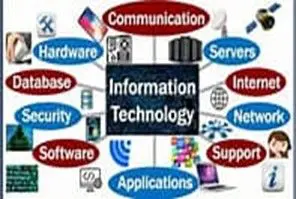
Most people think the abacus was the first tangible piece of IT, where you entered data, processed it, and displayed the new information for review and the creation of new knowledge. Paper and pencil became the first IT Data Processing peripheral for recording and storing the information for future uses or analysis.
Over several thousand years, IT has developed into a complex electronic adaptation of those original Information processes and communications principles, with various IT elements contributing to the business and business decisions making model.
The Internet and HTTP (Hypertext Transfer Protocol) introduction in the 1990s extended the IT model to include individual needs, the creation, and delivery of entertainment, new IT processes to stimulate learning, and new IT concepts of Web Pages and automation. Netflix, Amazon, Roku, and Googling are modern IT achievements along with self-driving vehicles and self-service checkouts.
The Internet is now a significant piece of IT since it facilitates the communications element.
People initially described the Internet as a global electronic communications network that connected discrete IT computer networks together, using the Internet protocol suite (TCP/IP) to communicate between the multiple discrete computer networks. Discrete organizations typically developed and operated their own IT to provide internal Information Services (IS) to their employees and stakeholders. The Internet typically provided shared packet data pipes between distinct data centers.
Businesses/Governments used the Internet to get data or send information (File Transfer Protocol). Data collection, centralized analytics, and the client-server computing model represented 90% of the Internet traffic, before the visualization and social media evolution over the last twenty years. The client-server interactive model got adopted early in the Life Cycle of the Internet and quickly expanded as the World Wide Web (WWW) internet sub-network generated the new WEB pages and Web Services for people, instead of just organizations.
The WWW sub-net has become extremely popular over the years. Today, most people think the WWW is the Internet, at least until they get a security warning about their phone number and name on the Dark Web (WWW does not work there) or read a secret memo from the DOD in a Faraday cage.
The adoption and evolution of the Over the Top (OTT) WEB Information Services from discrete businesses, at the end of the last century began the transformation of the Internet sub-network into the Internet of Things (IOT) and services sub-network. Things getting IS from multiple IT suppliers and the new Internet Service Provider (ISP) processes that were independent of the ownership of the Information Technology (IT) they served, brought the entertainment, education, and gaming information services over new connections to the discrete business, government, and home computer networks.
The Internet of Things (IOT) term now describes the embedding of new non-traditional objects (devices), new sensors, new computer applications and enabling them to communicate over the Internet and get Information Service (IS) operating on almost anything and almost everything.
These new devices, sensors, functions, and their data/service management have changed the way organizations design and operate their own discrete electronic infrastructure elements to gain the most advantages from the new IOT technologies within their still somewhat discrete private IT infrastructures.
The evolution of Managed Service Providers (MSP) and Cloud Service Providers (CSP) operating OTT of the discrete local IT networks has created new computing and security demands for near real-time analytics and analysis (Machine Learning).
This new computing model need may seem to be counter-intuitive to the original Internet model that was based on centralized private data centers that did not serve up movies-on-demand or cloud gaming services to thousands of players that might affect perceived performance and security.
The new IOT model also changed the architecture of computing and data storage, and it is now causing the building out of new IT applications, around the intelligence of the things, instead of just the data centers where traditional data collection, processing, and storage occurs.
Edge computing introduces and inserts the extra computer power needed and most times, it also moves the data storage closer to the application user, to speed up analysis at the ingestion point in real-time and reduce the latency from remote processing or storage.
If you think about all the data that IOT platforms ingest, the information they create and communicate, you can easily see how IT might also affect perceived user performance, security, or even regulatory compliance. The value of the IOT process demands it be available. In short, no one wants their Information Services platform to break, and you do not want them to lose your data or worse yet, your high-value information to pirates or competitors.
Being able to do more local processing created the first PC and what they called VisiCalc with storage and printing features, replacing the abacus, paper, and pencil. What is new today, with edge computing, is that business applications are becoming much more distributed, trying to meet the needs of the local IS user and their local devices.
When IT planners think about the original internet and even cloud computing, they quickly became very centralized, to save money via shared processing and efficient storage for lots of users sharing the information. We initially built the private data centers close to the Terminal and PC user. The data center campus and regional center followed within a short period. The cloud platforms, with a hundred million users in 150 countries though, are typically either on the coast or scattered in the middle of the country.
In today’s computing environment, it is quite common for a packet to take 50 to 80 milliseconds to move the data to where they need to be for processing. Jargon words like congestion, lost packets, and flow control enter the perceived performance at the user level.
Edge computing and developing edge-native applications distribute new data collection processing and may even transform transport loads in ways that reduce certain portions of centralized remote processing and the transport time in ways that an IS consumer sees in terms of performance.
Even data storage is being transformed, as they distribute data centers to get closer to the information service consumer. Microsoft’s Azure Edge Computing deployment is an example of the transformative IT process being adopted as service efficacy needs to augment the traditional centralized efficiency models. The “unaccustomed” edge computing model (Data Center closer to User) and edge computing separate from the data center reflects the new as a service model, as shown below from the user, IS supplier, IT owner perspectives.
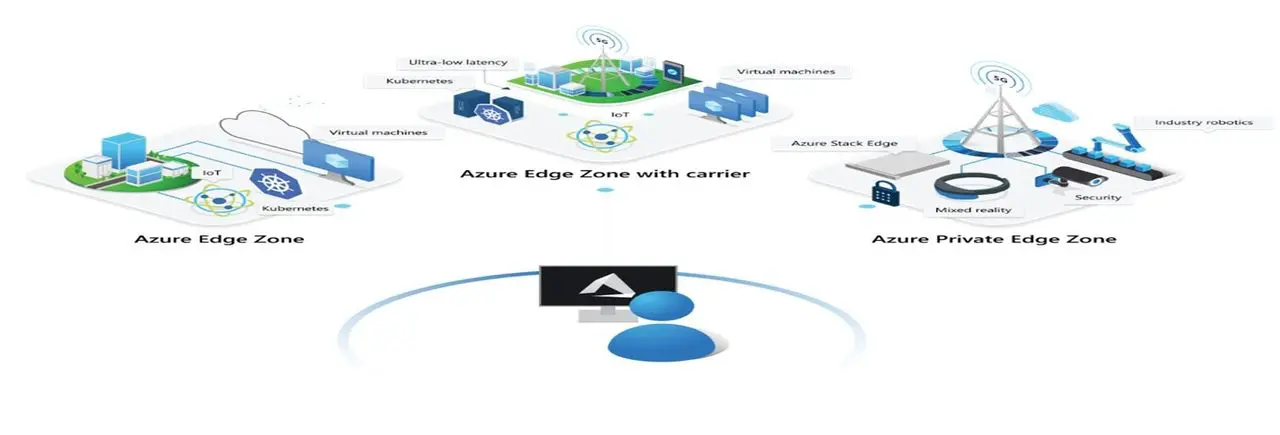
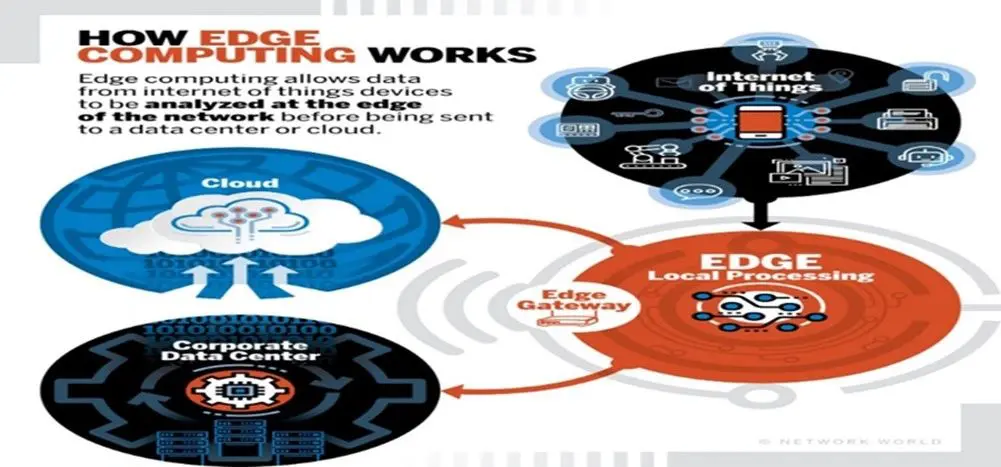
While we can conceptually visualize the developing IT model, it becomes a bigger challenge to visualize the Information Security (Info-Sec) issues of the information owners and the cybersecurity challenge of the various IT suppliers.
We have spent billions trying to get Info-Sec processes in place and virtually every Enterprise and government agency will have implemented its own Software-Defined Wide Area Network (SD-WAN) over the next several years. Clearly, the breaches, the growth in ransomware attacks, the exposure of backdoors, and even the failures of security products all lead to the conclusion that much more needs to be done. Worse yet, new IT will continue to appear over the next several years, trying to cover the holes we know about while creating new ones as well.
Summary
IOT has expanded the use of IT and IS in ways that have had a profound impact on economies and societies, as IT and IOT develops the new Mixed Reality (MR) environment, where a Virtual Reality (VR) Amazon and a Virtual work at home job, has more impact on our lives than the physical reality of a shopping center down the street or getting to the office on time. Education, Health Care, and Government MR are in their infancy stages in the new IOT evolution.
Hopefully, this overview helps the reader understand how the O in IOT will continue to affect them and how the holes in InfoSec and cybersecurity are the weakest links in this MR evolution being created by IOT.